The building
The Spanish Synagogue, explained
A short history of the Moorish Revival synagogue in Josefov: the 1868 building, its decoration and the composer who played its organ.
Book a seat for the concert ↗Quick answer
The Spanish Synagogue in Prague’s Josefov was completed in 1868 by Vojtěch Ignác Ullmann and Josef Niklas in the Moorish Revival style, according to the English Wikipedia. It replaced an older synagogue, Altschul, and its interior was gilded and painted with arabesque between 1882 and 1893. It is now a museum run by the Jewish Museum in Prague, and the concert takes place inside it.
A quarter and a site
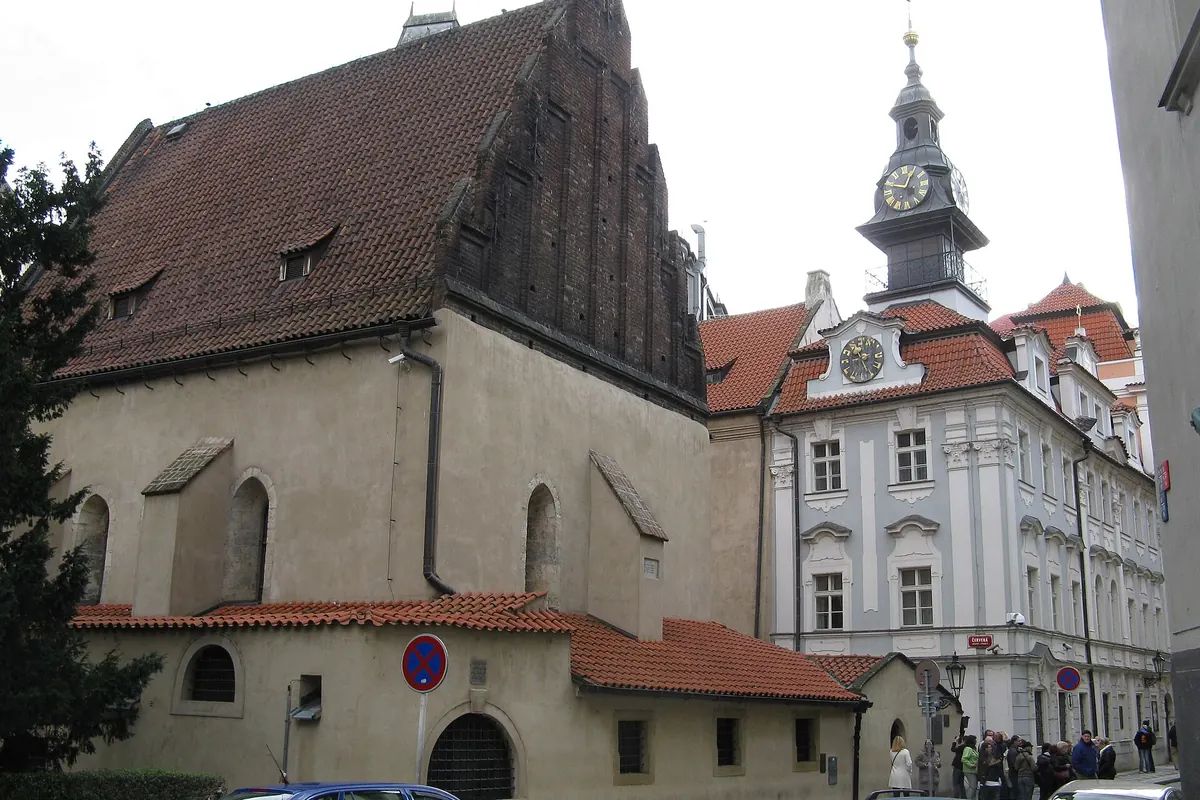
Josefov, the English Wikipedia says, was once the city’s walled Jewish Town and is now the smallest cadastral area in Prague. It was renamed Josefstadt in 1850 after Joseph II. The synagogue stands on ground where an older place of worship called Altschul stood until 1867.
The building of 1868
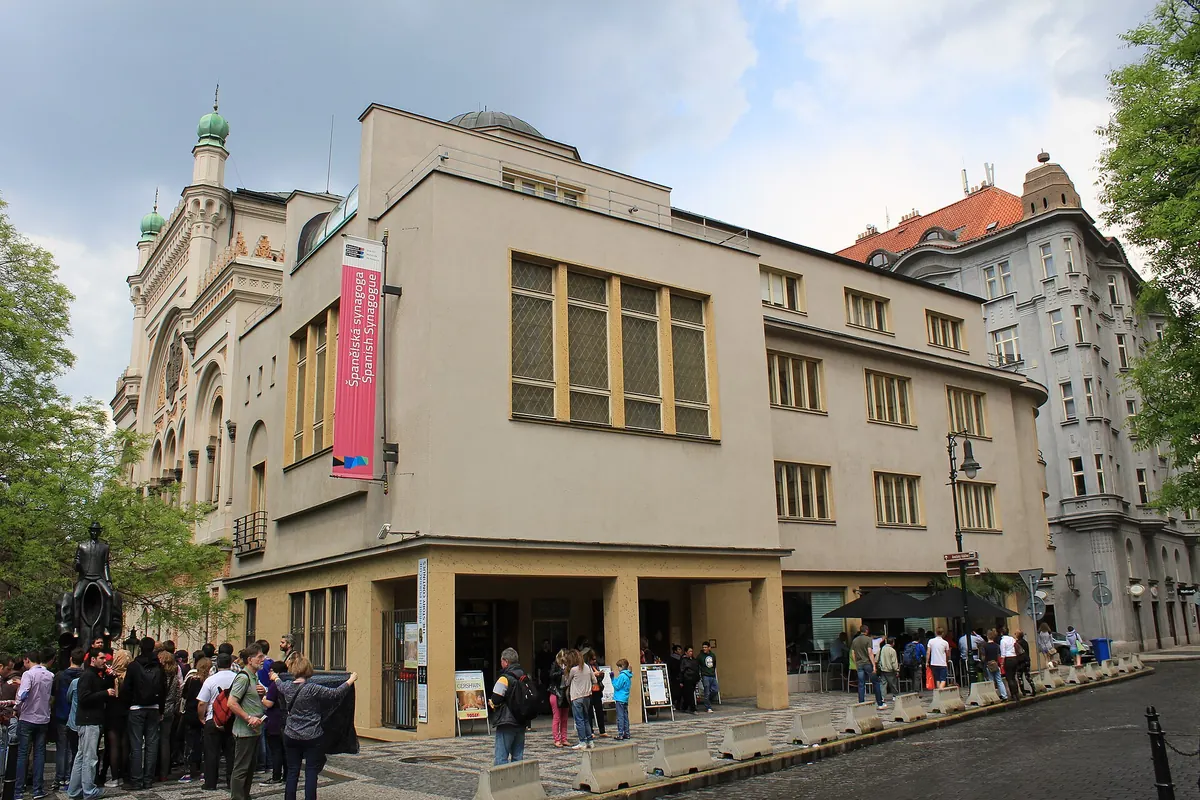
The English Wikipedia credits Vojtěch Ignác Ullmann and Josef Niklas with the plans and the interior and gives 1868 as the year of completion. The page adds that modernists in the community had demolished Altschul a year before. Early German-speaking worshippers called the new building the Geistgasse-Tempel.
Why Moorish
The Moorish Revival style, says the English Wikipedia, drew on Moorish and wider Islamic architecture and spread in the mid-19th century. Jews in Central Europe took it up, linking its forms to the Golden Age of Jewish culture in Spain. The same encyclopedia lists the Prague building among European examples.
The decoration
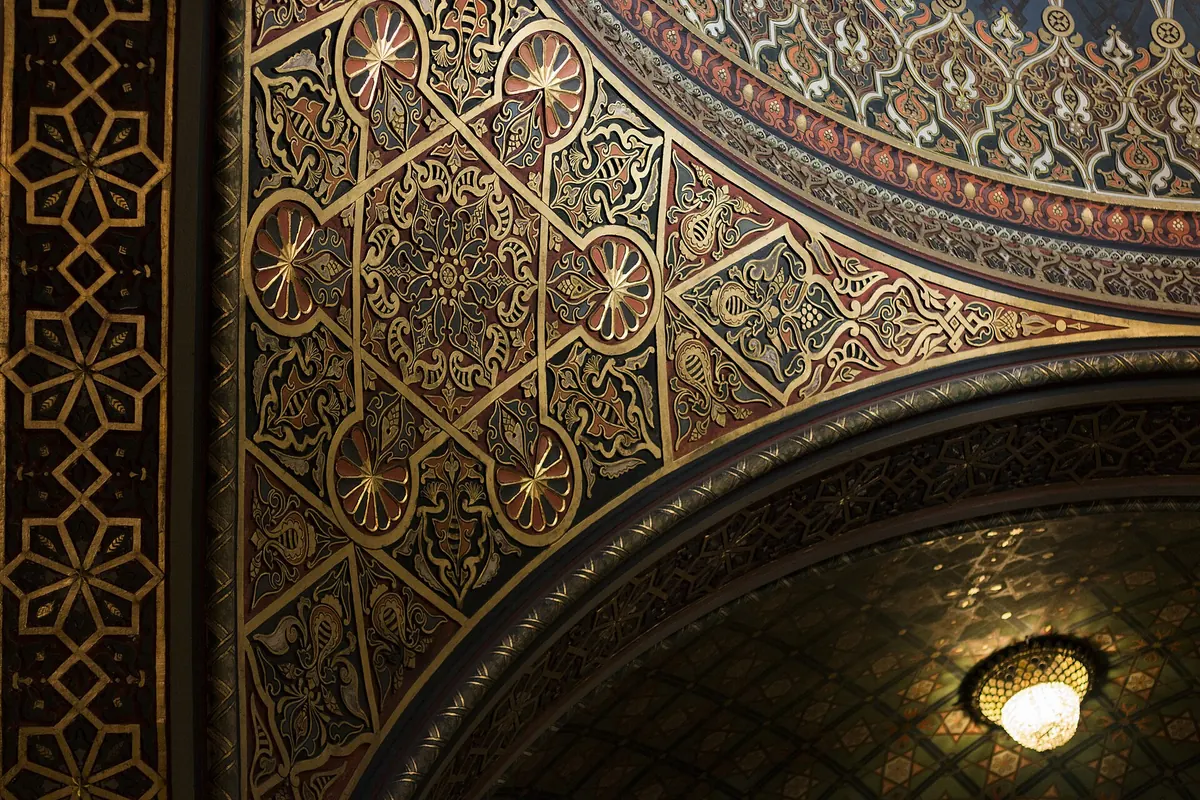
The English Wikipedia says Antonín Baum and Bedřich Münzberger designed the gilded, multicoloured arabesque that was applied between 1882 and 1893. A large stained-glass window with a Star of David followed in 1882 and 1883. The booking page for the concert adds that the stylised Islamic motifs cover the walls, doors and gallery balustrades.
The organ and the composer
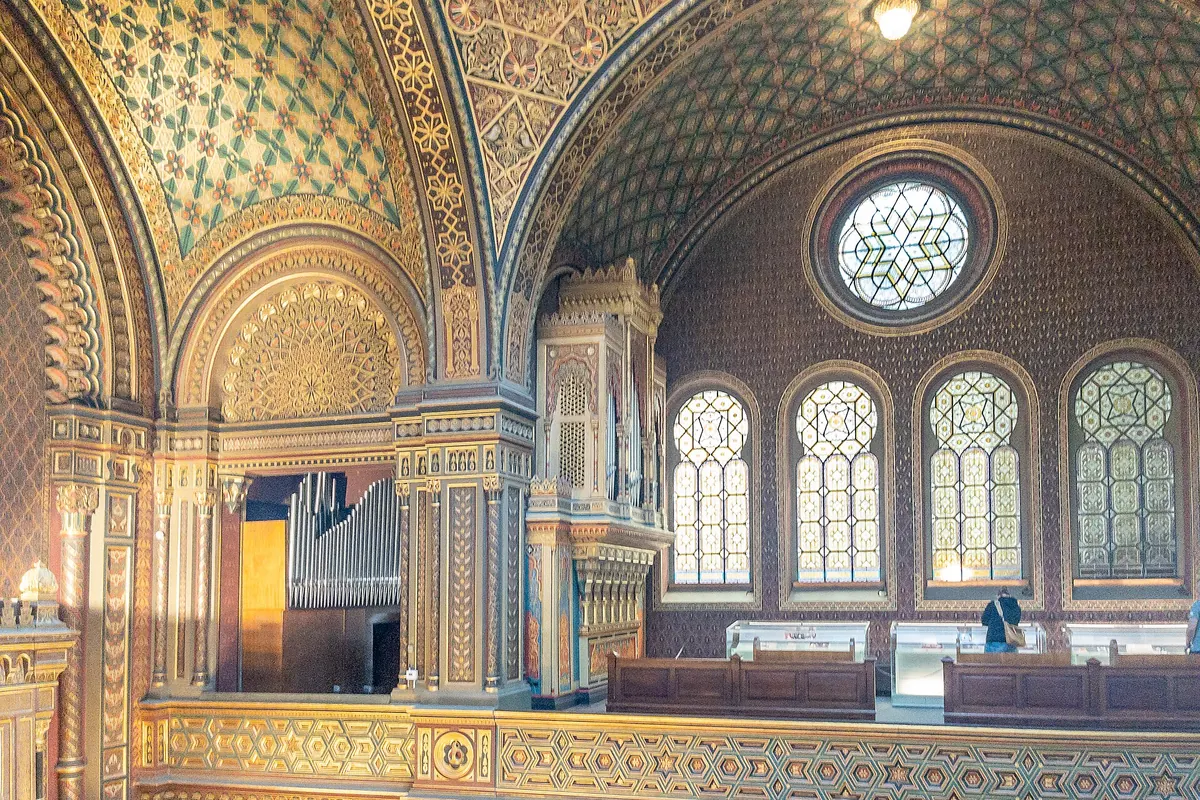
The English Wikipedia places an organ on the south balcony. It also says František Škroup, who wrote the melody of the Czech anthem, worked part-time as organist at this temple. That is the link between the synagogue and the Czech anthem, which began as a song in the 1834 play Fidlovačka.
A museum and a concert hall
After the Second World War the synagogue went to the Jewish Museum in 1955 and its interior was restored in 1958 and 1959, says the English Wikipedia. It closed after 1982 and reopened in 1998. Today an exhibition on the modern history of Jews in the Czech lands is shown there, and the booking page lists a concert in the same space.
The other synagogues of Josefov
The Jewish Museum in Prague, founded in 1906, also runs the Maisel, Pinkas and Klausen synagogues, the Ceremonial Hall and the Old Jewish Cemetery. The Old New Synagogue, completed in 1270 in the Gothic style, is operated by an Orthodox congregation, the English Wikipedia says. The Pinkas Synagogue, completed in 1535, is a memorial to Bohemian and Moravian Jewish victims of the Shoah.
Sources